
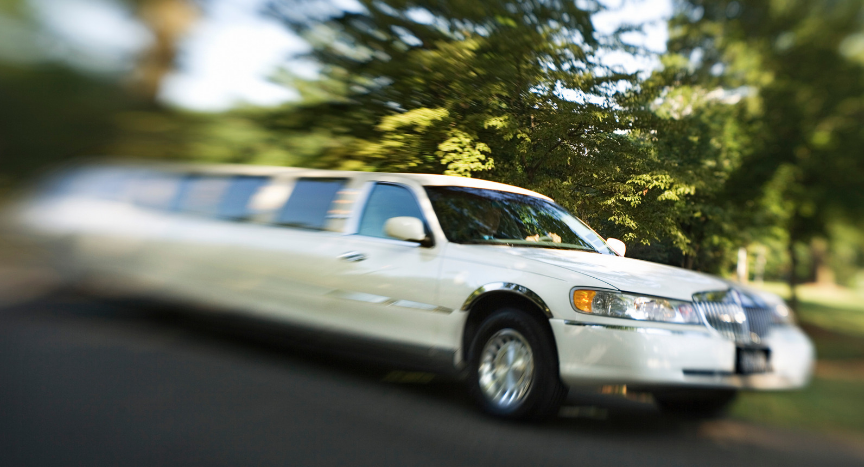
A limousine eventually reaches a point when it no longer makes sense in active commercial service. Mileage accumulates, interiors age, repair needs increase and passenger preferences move on to newer vehicles. For many former fleet vehicles, the next stop is simply the used market, where price and condition determine whether another owner sees enough life left to keep it on the road.
Older stretch limousines can be more complicated. They were not simply luxury sedans with extra rear-seat space. Many were substantially modified by specialty coachbuilders, sometimes with lengthened frames, custom bodywork, partitions, bars, entertainment systems and interiors designed around the expectations of a particular era in chauffeured transportation.
Once commercial usefulness is no longer the main measure of the vehicle, those details can take on a different significance. A former working limousine might become a private car, restoration project or export. A rarer example can attract collectors because of its coachbuilder, unusual configuration or former owner, while a handful survive because their history eventually earns them a place in a museum.
The result is an unusual secondhand market where a vehicle built to carry paying passengers can eventually become a piece of transportation history.
Leaving a Fleet Does Not Necessarily End the Limousine’s Working Life
Retirement from one company can be much less dramatic than the word suggests. A limousine may simply be sold to another operator, dealer or private buyer when its original owner decides the vehicle no longer fits the fleet.
Age alone does not determine what happens next. Condition, mileage, mechanical support and the continuing demand for that style of vehicle all play a part. A stretch that has become difficult to book in one market may still appeal to a buyer who wants it for weddings, special events or occasional private use.
That market has changed as the role of the traditional stretch has diminished. The National Limousine Association told The Washington Post in 2023 that stretches accounted for less than 1% of services offered by limousine companies, compared with roughly 10% a decade earlier. SUVs, luxury vans, sedans and other vehicles have taken a larger role in chauffeured fleets, leaving older stretches with fewer obvious commercial destinations than they once had.
For some vehicles, that is where the story becomes more interesting. Once another commercial operator is no longer the most likely buyer, the qualities that matter begin to change.
The Coachbuilder Can Become Part of the Vehicle’s Identity
Most traditional stretch limousines did not leave a Lincoln, Cadillac, Mercedes-Benz or Rolls-Royce factory in their final form. A specialty coachbuilder performed the conversion, and decades later, the company responsible for that work can be an important part of identifying what survives.
A 1986 Rolls-Royce Silver Spur offered by RM Sotheby’s provides an example. The car had been converted into a stretch limousine by Indiana-based DaBryan Coach Builders and was later offered as a collector vehicle with a $40,000 to $50,000 estimate.
A 1993 Cadillac Fleetwood converted by Sayers & Scovill followed a less glamorous but equally revealing route. The limousine had previously served a funeral home before moving into private ownership, and it eventually sold through Bring a Trailer in 2024 for $5,000.
The enormous difference between vehicles like these shows why there is no standard value attached to an old stretch. The original make and model still matter, but so can the conversion, condition, documentation and history accumulated after the car was modified.
Conversion-specific components create another consideration for anyone trying to preserve one. Mechanical parts shared with the original production vehicle may still be available, while custom glass, trim, interior pieces, electrical systems and body components can be much harder to replace. The features that make an old limousine interesting can also make restoration more complicated.
Provenance Can Completely Change What Happens Next
A commercial limousine can also outlive its original purpose because of the people who once rode in it or the organization that owned it.
Christie’s previously offered a 1988 Mercedes-Benz 560SEL that had been purchased by Playboy Enterprises and converted into a 52-inch stretch by Allen Coachworks. Period equipment included a partition, upgraded audio and video systems, rear controls and extensive interior appointments. By the time it reached the collector market, those details documented both the conversion and the luxury expectations of the period in which it was built.
Other limousines survive because their histories are tied to individual entertainers or public figures. A custom 1969 Lincoln Continental associated with Jackie Gleason surfaced on Bring a Trailer in 2025 with period features including a television and power-operated wet bar.
In that part of the market, former commercial usefulness becomes almost irrelevant. Buyers are looking at provenance, originality, documentation and the survival of unusual period equipment. A television or elaborate bar that became hopelessly outdated for a working fleet can become one of the details that makes a vintage limousine worth preserving.
A Few Eventually Become Historical Artifacts
The distance between fleet vehicle and museum object can span decades and several owners.
The Henry Ford’s 1964 Lincoln Continental limousine is an unusually well-documented example. Ford and coachbuilder Lehmann-Peterson modified the vehicle for Pope Paul VI’s 1965 visit to New York. It later went to Chicago, where it served as a parade car and carried visiting dignitaries, including crews from the Apollo 8, Apollo 11, Apollo 13 and Apollo 15 missions.
After its public-service career ended in the early 1970s, the Lincoln did not immediately enter a museum. It passed through five private collections before The Henry Ford acquired it in 2016.
That history illustrates something important about preservation. A limousine does not have to be recognized as historically significant at the moment it leaves service. Private owners and collectors can become the bridge between its working years and eventual museum preservation, keeping the vehicle and its documentation intact long enough for its broader significance to become clear.
The Stranger the Limousine, the More Unusual Its Second Life Can Be
The stretch era went far beyond conventional Lincoln and Cadillac sedans. Coachbuilders and custom shops lengthened luxury cars, SUVs and vehicles that were never designed with limousine service in mind.
Some of those unusual creations now occupy a niche within the collector market. A 1996 Excalibur Phaeton limousine offered through Mecum was one of fewer than 100 Excalibur limousines built and retained the privacy screen, wet bar and separate climate systems installed for passengers. A custom Porsche 356 limousine commissioned for a collector’s daughter’s wedding later became part of the Taj Ma Garaj collection before moving to another owner.
Their appeal is different from that of a former fleet Town Car. Rarity, craftsmanship and sheer novelty can matter more than whether the vehicle would still make sense in professional service.
That creates a peculiar reversal in value. During a limousine’s working years, an unusual configuration can become a liability if customers stop requesting it or parts become difficult to source. Years later, the same oddity may be exactly what interests a collector.
The Market Can Extend Beyond the United States
Retired American stretches do not necessarily remain in the domestic market. Dealers continue to advertise used Lincoln Town Car and other stretch limousines to international buyers, sometimes offering assistance with overseas shipping.
One example was a 2011 Lincoln Town Car converted by Krystal that was marketed in 2026 by a U.S. seller offering shipment through the Port of New Jersey and specifically advertising to buyers in the United Kingdom and other international markets.
Individual listings cannot tell us how many retired U.S. limousines ultimately leave the country, so it would be difficult to characterize export as a typical destination. What they do show is that the potential buyer pool does not end when domestic commercial demand declines.
For a highly specialized vehicle, access to buyers outside the United States can provide another path after its original fleet career has ended.
Retired Limousines Preserve More Than the Vehicles Themselves
The traditional stretch limousine no longer occupies the place in chauffeured transportation that it once did, which makes the surviving vehicles increasingly useful records of how the industry changed.
Their interiors show what luxury meant at different points in time. Privacy partitions, wet bars, televisions, elaborate lighting and custom audio systems reflected what customers expected from a premium group vehicle long before luxury vans and SUVs became major parts of the market. The coachbuilders behind them also represent a specialized corner of American vehicle manufacturing that was closely tied to the limousine industry’s growth.
Most retired stretches will never become valuable collectibles, and only exceptional examples will enter museums. Many will simply change owners until age, condition or repair costs determine their fate.
The survivors tell a broader story. Once a limousine stops earning money as fleet equipment, the qualities that kept it useful in commercial service become less important, while its construction, originality, history and rarity begin to matter more. A vehicle that once existed to carry the next reservation can eventually become evidence of what the limousine business looked like in another era.
FAQ
Can the original coachbuilder of an older limousine still be identified?
Often, but documentation varies. Builder plates, conversion labels, original paperwork, vehicle records and surviving invoices can help establish who completed the stretch conversion. That information can be particularly useful when restoration requires components that were not installed by the original automaker.
Why can restoring an old stretch limousine be more difficult than restoring the sedan it was based on?
The drivetrain may share many components with the original production model, but the conversion introduced parts that were specific to the limousine. Custom glass, extended wiring, interior panels, climate-control components, body sections and other pieces may no longer have readily available replacements.
Does celebrity ownership automatically make an old limousine valuable?
No. Provenance can increase collector interest, but documentation, condition, rarity and the significance of the former owner or event still matter. A documented connection is generally more meaningful than an unsupported claim about who once used the vehicle.
Are retired American limousines sold overseas?
Yes, individual U.S. dealers and sellers market used stretches to international buyers and offer export assistance. Available listings demonstrate that an overseas market exists, although there is not enough public data to determine what percentage of retired U.S. limousines are exported.
What makes a retired limousine museum-worthy?
There is no single standard, but association with an important person or event, unusual coachwork, rarity and a well-documented history can all contribute. The Henry Ford’s former papal Lincoln is an exceptional example because both the vehicle and its later use are tied to significant historical events.
The ProDriverPoint editorial team creates practical content covering industry news, operations, technology, safety, and workforce developments for professional drivers and transportation businesses. Each article is written to help readers understand the changes affecting passenger transportation and the services they provide.
Last Updated: October 9, 2026



Customer Reviews
Thanks for submitting your comment!